History
At Phoenix Primary, our children are historians.
At Phoenix Primary, our History curriculum is delivered through CUSP, ensuring that learning is ambitious, carefully sequenced and built to last.
Our intent is to help children make sense of the past — from the rich local history of Liverpool to the wider civilisations, events and individuals that have shaped Britain and the world. We want pupils to understand not just what happened, but why it happened, how societies changed over time, and how the past influences the present.
Through CUSP History, pupils become increasingly expert as they progress through school. Knowledge is deliberately accumulated, revisited and connected so that children develop a secure understanding of chronology, cause and consequence, similarity and difference, and historical significance. Over time, they grow in confidence to think critically, ask historical questions and interpret evidence using precise vocabulary.
History at Phoenix is not only about learning facts — it is about developing perspective, curiosity and informed judgement. Through the study of diverse societies, significant individuals and moments of change, pupils develop the awareness and understanding needed to engage thoughtfully with the world around them.
🌟 Our Phoenix Values in History
🔴 Resilience
History encourages pupils to grapple with complex events, competing interpretations and challenging periods of time. Children learn to persevere when analysing sources and constructing reasoned arguments.
🔴 Responsibility
Through studying past injustices, societal change and significant turning points, pupils develop an understanding of fairness, rights and their role in shaping the future.
🔴 Kindness
History nurtures empathy. By learning about people from different periods, cultures and backgrounds, pupils develop respect and understanding for the experiences of others.
🔴 Ambition
We challenge pupils to think critically, use precise historical vocabulary and present well-reasoned explanations. Children are encouraged to see themselves as thoughtful, informed citizens who can learn from the past to shape the future.
Through engaging enquiry questions, analysis of primary and secondary sources, discussion and debate, we spark curiosity and encourage purposeful historical thinking. Children are taught to sequence events, identify cause and consequence, compare civilisations, interpret evidence and draw reasoned conclusions. In doing so, they develop both secure substantive historical knowledge and the disciplinary skills needed to think like historians.
We want our children to remember their History lessons at Phoenix — to cherish the stories they have explored, the people they have studied and the connections they have made across time. Most importantly, we want them to leave us informed, reflective and confident, ready to understand how the past shapes the world they live in today.
At Phoenix, we are studying CUSP History. Through this, pupils become increasingly expert as they progress through the curriculum, accumulating, connecting and making sense of rich substantive and disciplinary knowledge about chronology, change and civilisation.
1. What Pupils Will Know – Substantive Knowledge
Substantive knowledge is the subject content and explicit vocabulary pupils use to understand the past.
In CUSP History, substantive knowledge is carefully sequenced so that pupils build secure mental models of chronology, civilisation and change over time. Misconceptions are identified and addressed thoughtfully, once pupils have constructed sufficient background knowledge to position new learning securely.
In CUSP History, learning is connected through key substantive concepts (the Big Ideas):
-
Community
-
Knowledge
-
Invasion
-
Civilisation
-
Power
-
Democracy
These concepts act as golden threads, connecting studies across year groups. They help pupils move beyond isolated facts to develop a coherent and increasingly sophisticated understanding of how societies developed and how the past shapes the present.
Substantive concepts such as invasion and civilisation are taught through explicit vocabulary instruction and through the direct content and context of each study.
2. What Pupils Will Do - Disciplinary Knowledge
Disciplinary knowledge is how pupils learn to think like historians.
We call this Working Historically.
Pupils construct understanding through historical enquiry, claims, arguments and interpretation. They are taught explicitly how historians analyse and interpret the past.
Key disciplinary elements include:
-
Chronology
-
Cause and Consequence
-
Change and Continuity
-
Similarity and Difference
-
Evidence
-
Significance
Each study is built around structured enquiry questions that require pupils to apply their substantive knowledge in a disciplinary way. Knowledge notes guide pupils towards answering carefully designed questions, helping them to reason, infer and draw conclusions.
Historical analysis is developed through selecting, organising and integrating knowledge in response to these structured challenges. Over time, pupils become increasingly confident in evaluating sources, considering different perspectives and forming reasoned judgements about the past.
IMPLEMENTATION
CUSP History is built on cumulative knowledge. Each study draws upon prior learning, with deliberate retrieval and practice enabling pupils to connect periods, people and events across time.
What do we teach?
EARLY YEARS FOUNDATION STAGE
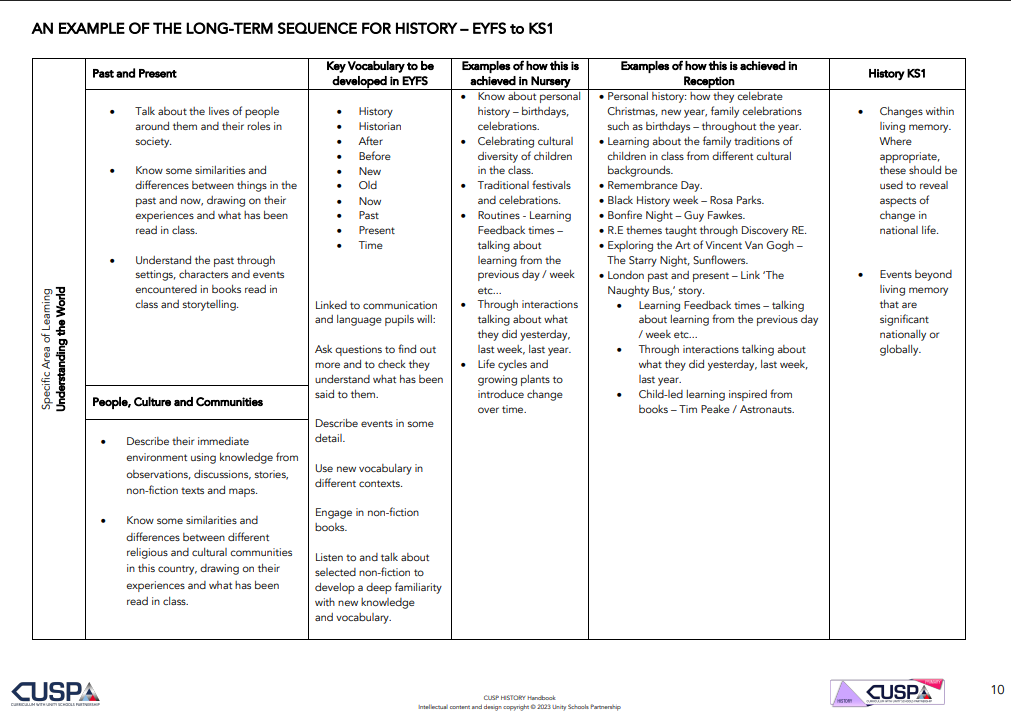
In EYFS, History is developed through Understanding the World.
Children begin by exploring changes within their own lives and families. They talk about past and present events in their own experiences and begin to understand the language of time, such as before, after, now and long ago.
Through stories, photographs and discussion, children learn about people who have helped us or achieved special things. They explore how life may have been different in the past and begin to recognise that things change over time.
Celebrations, local events and significant national occasions help children develop an early sense of chronology and community. These rich early experiences lay strong foundations for future historical understanding.
Key Stage 1
In KS1, pupils develop a secure sense of time, place and change.
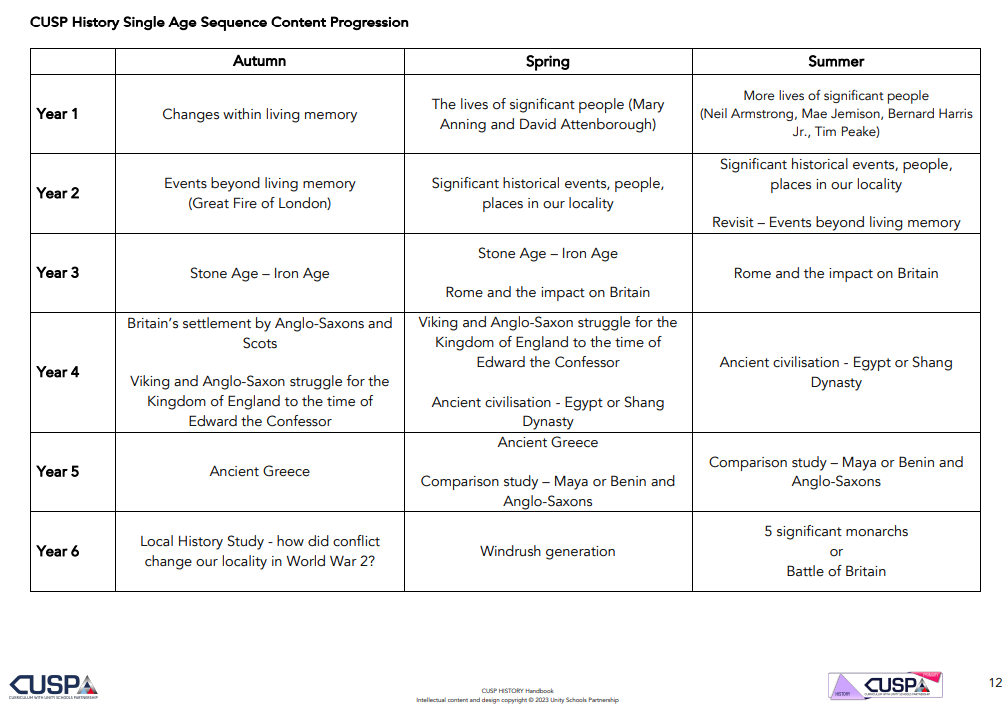
They begin by studying Changes within Living Memory, building early chronological understanding and recognising how their local community has changed over time.
Pupils study the lives of significant individuals, including David Attenborough and Mary Anning. These studies are extended through further significant individuals such as Neil Armstrong, Mae Jemison, Bernard Harris Jr. and Tim Peake. Chronology and context help pupils understand legacy and significance.
Events beyond living memory are introduced through the study of Great Fire of London, strengthening understanding of chronology and cause.
Local history is explored through significant events, buildings and people, helping pupils understand how the past has shaped the place they live today.
Lower Key Stage 2
In Lower KS2, pupils deepen their understanding of cultural and technological change.
They study Britain from the Stone Age to the Iron Age, developing knowledge of early settlement, survival and innovation. This foundational knowledge supports later understanding of the Roman invasion of Britain and the impact of empire.
Substantive concepts such as invasion, law, civilisation and society are developed through explicit vocabulary instruction.
Pupils study the settlement of Britain by Anglo-Saxons and Scots, exploring how Christianity and powerful kings shaped society. The Viking struggle for the throne and the development of Danelaw deepen understanding of power and conflict.
Ancient civilisations are explored through studies such as Ancient Egypt, broadening pupils’ understanding of global civilisations.
Upper Key Stage 2
In Upper KS2, pupils develop increasingly sophisticated historical reasoning.
Ancient Greece is studied for its achievements and influence on the western world. Pupils connect this learning to what was happening in Britain at the same time, strengthening chronological awareness and comparison.
Later, pupils compare the Maya civilisation with Anglo-Saxon Britain, examining similarities and differences in culture, settlement and innovation.
Modern history is explored through the impact of the Second World War on the local area and through studies such as the Windrush Generation. Pupils learn about slavery, migration and injustice, developing understanding of discrimination and prejudice and the importance of equality.
Schools also study significant monarchs, enabling pupils to connect themes of power, democracy and leadership across time.
Throughout UKS2, pupils retrieve and reuse prior knowledge, enabling them to reason, compare and evaluate with increasing confidence and precision.
Years 1 - 6 Content Overview
How do pupils learn?
-
Class timetables have been built to ensure a broad and balanced curriculum.
-
Subjects have been blocked in a spaced retrieval model to support catch up and to build the frequency of history and wider curriculum subjects. This maximises learning time.



OVERVIEW OF KNOWLEDGE
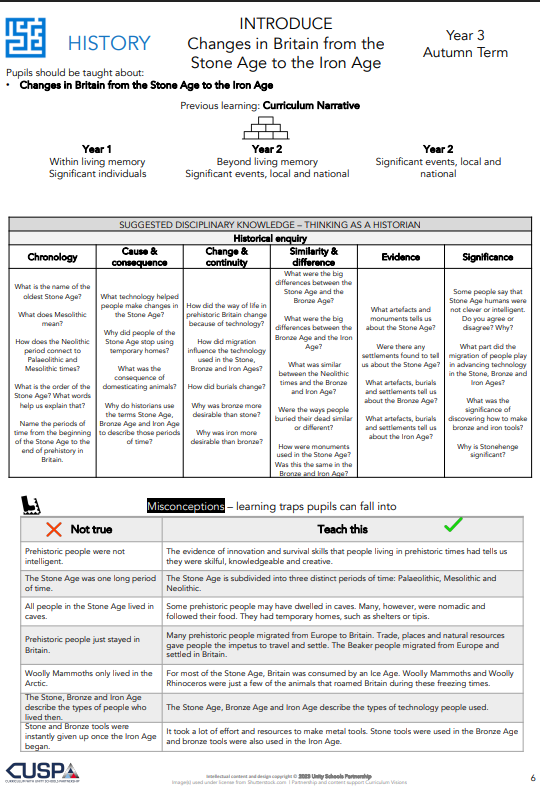
Each unit includes an overview for the teacher which details the big idea that pupils will be studying, prior knowledge, skills to be taught and common misconceptions.
KNOWLEDGE ORGANISERS
Dual coded knowledge organisers contain core information for children to easily access and use as a point of reference and as a means of retrieval practise.
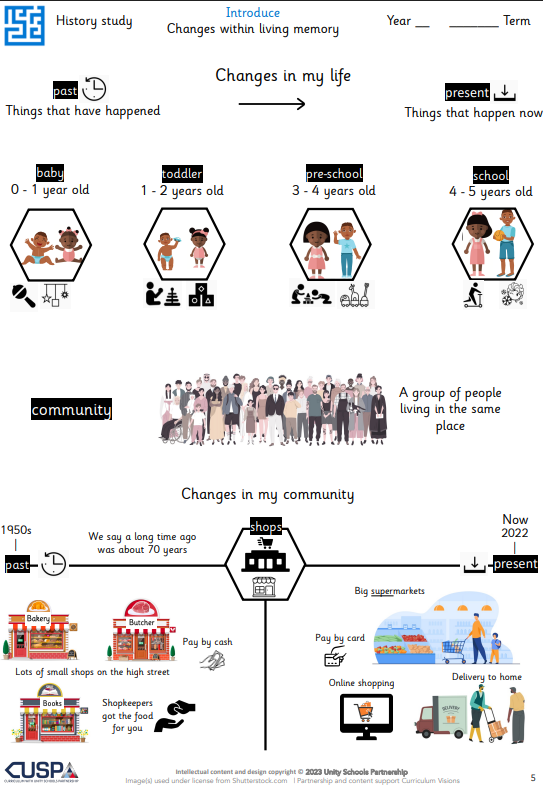
MAPPING OF KNOWLEDGE
The sequence of learning makes clear essential and desirable knowledge, key questions and task suggestions for each lesson and suggested cumulative quizzing questions.
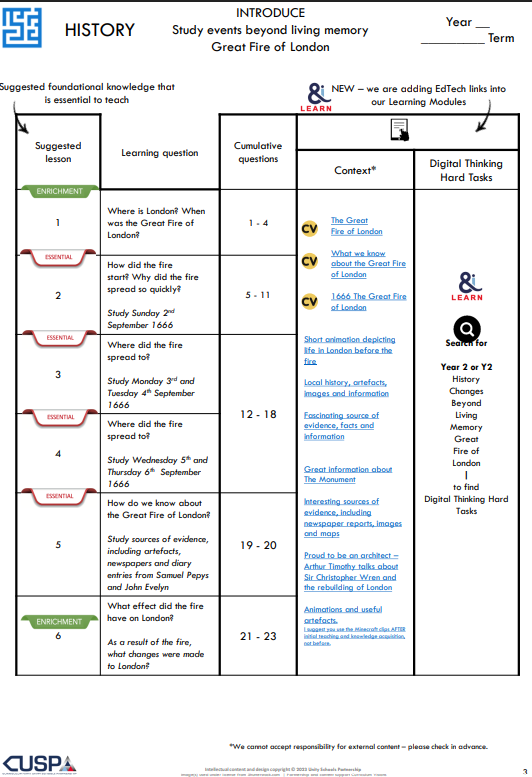
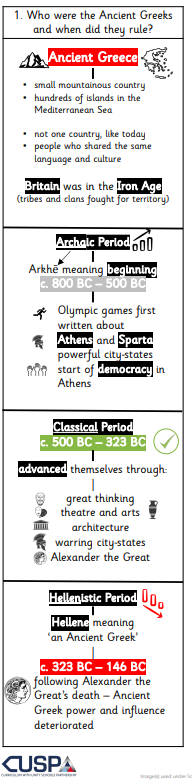
KNOWLEDGE NOTES
Knowledge notes are an elaboration in the core knowledge found in knowledge organisers.
Knowledge notes focus pupils’ working memory to the key question that will be asked at the end of the lesson. It reduces cognitive load and avoids the split-attention effect.
THINKING TASKS
Thinking historically tasks are used to encourage pupils to think hard about substantive knowledge, including vocabulary. As part of the ATTEMPT, APPLY OR CHALLENGE phases of a lesson. At the start of a lesson (CONNECT phase) to review and reuse prior knowledge.
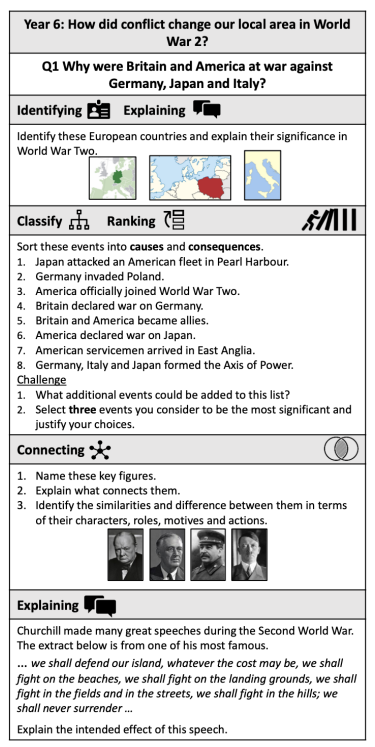
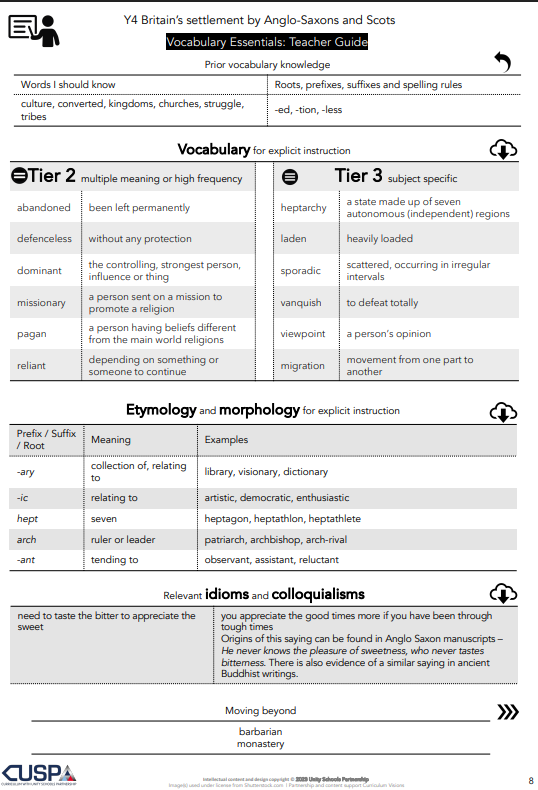
VOCABULARY
The units are supported by vocabulary modules which provide both resources for teaching and learning vital vocabulary and provide teachers with Tier 2 and 3 vocabulary with the etymology and morphology needed for explicit instruction details relevant idioms and colloquialisms to make this learning explicit.
We aim to provide a high challenge with low threat culture and put no ceiling on any child’s learning, instead providing the right scaffolding for each child for them to achieve.
IMPACT
At Phoenix Primary, the impact of our History curriculum is seen in the knowledge, curiosity and critical thinking of our pupils.
Children make strong and sustained progress from their individual starting points because learning is carefully sequenced, deliberately revisited and explicitly connected over time. As a result, pupils develop secure chronological understanding alongside the ability to think historically with increasing confidence and precision.
By the time pupils leave Phoenix, they are expected to achieve at least age-related expectations in History and are well prepared to engage thoughtfully with the complexities of the modern world.
The impact of our curriculum is also reflected in our Phoenix Values:
🔴 Resilience – pupils persevere when analysing evidence, grappling with complex historical events and constructing reasoned arguments.
🔴 Responsibility – pupils develop an understanding of fairness, justice and democracy through learning about the successes and injustices of the past.
🔴 Kindness – pupils show empathy and respect when studying diverse cultures, communities and lived experiences across different periods of history.
🔴 Ambition – pupils use precise historical vocabulary, think critically about cause and consequence, and confidently articulate their understanding of significance and change.
Enthusiasm for History is evident through pupil voice, discussion, the quality of written work and the thoughtful questions pupils ask. Our children leave Phoenix as informed, reflective and confident young historians who understand that the past shapes the present — and the future.
How do we know what our children have learnt?
-
Questioning
-
Pupil Book Study talking about learning with the children
-
Talking to teachers
-
Low stakes ‘Drop-in’ observations
-
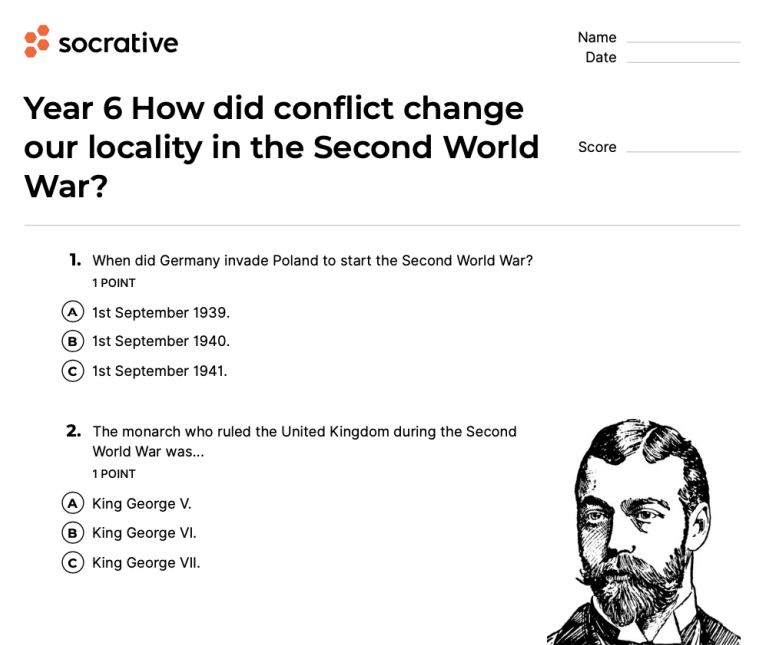
Quizzing and retrieval practise
-
Feedback and marking
-
Progress in book matches the curriculum intent
PUPIL BOOK STUDY TELLS US:
At Phoenix, we regularly look at pupils’ work to make sure our History curriculum is having the impact we intend.
1. Is our curriculum making a difference?
We check whether children are building secure knowledge over time and developing a deeper understanding as they move through the school.
2. Is learning lasting?
We look for evidence that teaching helps children remember more, not just complete tasks. We want learning to stick.
3. Are children thinking deeply?
We consider whether activities challenge pupils to think hard, apply what they already know and develop strong, long-term understanding.
This helps us ensure our History curriculum remains ambitious, engaging and impactful for every child at Phoenix.