
Design Technology
At Phoenix Primary, our children are designers.
At Phoenix Primary, our Design and Technology curriculum is delivered through CUSP, ensuring that learning is ambitious, carefully sequenced and built to last.
Our intent is to inspire and equip pupils with the knowledge, skills and confidence to design, make and evaluate purposeful products. We want children to understand that Design and Technology is about solving problems, meeting needs and improving the world around them.
Through Design and Technology, pupils develop an understanding of how innovation has shaped our lives and continues to influence the way we live, work and interact. From everyday objects to engineering marvels, children learn that design is everywhere — and that they can be part of shaping the future.
We want our children to love Design and Technology. We want them to believe there are no limits to their ambitions — whether they aspire to be engineers, chefs, architects, inventors, product designers or entrepreneurs.
🌟 Our Phoenix Values in Design & Technology
🔴 Resilience
Design rarely works perfectly the first time. Pupils learn to test, adapt and refine their ideas, understanding that improvement is an essential part of the design process.
🔴 Responsibility
Pupils learn to use tools, equipment and materials safely and respectfully. Through food technology and sustainability studies, they also develop awareness of healthy choices and environmental impact.
🔴 Kindness
Design projects encourage collaboration. Pupils learn to listen to others’ ideas, provide constructive feedback and work cooperatively towards shared outcomes.
🔴 Ambition
We challenge pupils to think creatively, apply technical knowledge accurately and evaluate their products with precision. Children are encouraged to see themselves as capable innovators and problem-solvers.
Through purposeful design briefs, extended practical sessions and structured reflection, we spark creativity and encourage thoughtful problem-solving. Children are taught to research, design, make, evaluate and apply their knowledge in meaningful contexts. In doing so, they develop secure substantive knowledge alongside the disciplinary skills needed to think and work like designers.
We want our children to remember their Design and Technology lessons at Phoenix — to cherish the products they have created and the confidence they have gained through practical achievement. Most importantly, we want them to leave us resourceful, reflective and capable, ready to innovate and contribute positively to the world around them.
At Phoenix, we are studying CUSP Design and Technology. Through this, pupils become increasingly expert as they progress through the curriculum, accumulating, connecting and applying rich substantive knowledge and design practice.
1. What Pupils Will Know – Substantive Knowledge
Substantive knowledge is the subject content and explicit vocabulary pupils use to understand Design and Technology.
In CUSP Design and Technology, knowledge is organised into carefully sequenced blocks covering:
- Food and Nutrition
- Mechanisms
- Structures
- Systems and Electrical Systems
- Understanding Materials
- Textiles
Vertical progression is woven throughout the curriculum so that pupils revisit these areas with increasing challenge and sophistication.
Within each discipline, pupils learn about materials, tools, technical processes, safety considerations and how products function. Core knowledge is explicitly taught so that children understand how and why products work — not simply how to assemble them.
Substantive knowledge also includes understanding design criteria, user needs and evaluation processes, enabling pupils to make informed and purposeful design decisions.
2. What Pupils Will Do – Disciplinary Knowledge
Disciplinary knowledge is how pupils learn to think and work like designers.
We call this Working as a Designer.
Pupils develop their design thinking through four key competencies:
- Design – deciding how something will look or function
- Make – creating by combining materials and components
- Evaluate – judging quality and effectiveness
- Apply – using knowledge and skills in purposeful contexts
Through this structured approach, pupils identify problems, consider user needs, generate ideas, build prototypes and refine outcomes. They evaluate their products against clear design criteria and justify their decisions using precise technical vocabulary.
Over time, pupils become increasingly confident in applying knowledge creatively and independently — demonstrating both secure technical understanding and strong design thinking.
IMPLEMENTATION
CUSP Design and Technology is organised into carefully sequenced blocks, each focusing on a specific technical discipline. Progression is deliberately woven throughout the curriculum so that pupils revisit key areas with increasing complexity.
Design and Technology is taught in extended sessions to allow pupils time to develop, test and refine their products in depth.
Retrieval practice, vocabulary instruction and structured lesson phases support pupils in building secure technical knowledge over time.
What do we teach?
EARLY YEARS FOUNDATION STAGE
In EYFS, Design and Technology is developed through Expressive Arts and Design and Understanding the World.
Children explore construction, joining materials, simple mechanisms and food preparation through hands-on play. They build, test and adapt models using a range of materials and tools.
Through exploration and guided questioning, children begin to understand that designs have purpose and that ideas can be improved. These rich practical experiences lay strong foundations for future design thinking.
Years 1 - 6
Across Years 1–6, pupils revisit key areas of Design and Technology with increasing complexity and independence.
In Key Stage 1, pupils focus on simple mechanisms, basic structures and food preparation. They learn to follow clear design criteria and evaluate their products against a purpose.
As pupils move into Key Stage 2, they develop more advanced technical knowledge, including electrical systems, complex structures and refined textile techniques. They design with increasing independence, considering user needs, functionality and sustainability.
Throughout Years 1–6:
-
Pupils follow the structured process of research, design, make and evaluate.
-
Technical vocabulary is explicitly taught and revisited.
-
Knowledge and skills build cumulatively over time.
-
Evaluation and refinement are central to every project.
By Upper Key Stage 2, pupils demonstrate increasing independence, technical precision and confidence in solving problems through design.Years 1 - 6
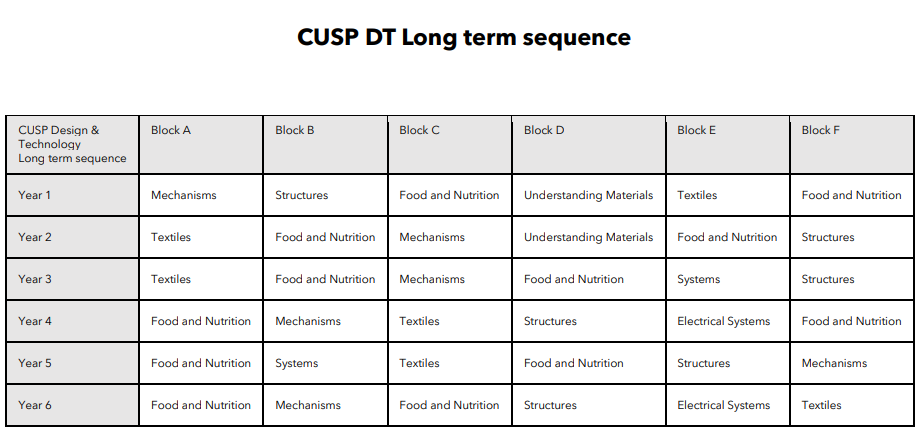
How do pupils learn?
-
Class timetables have been built to ensure a broad and balanced curriculum.
-
Subjects have been blocked in a spaced retrieval model to support catch up and to build the frequency of Design Technology and wider curriculum subjects. This maximises learning time.



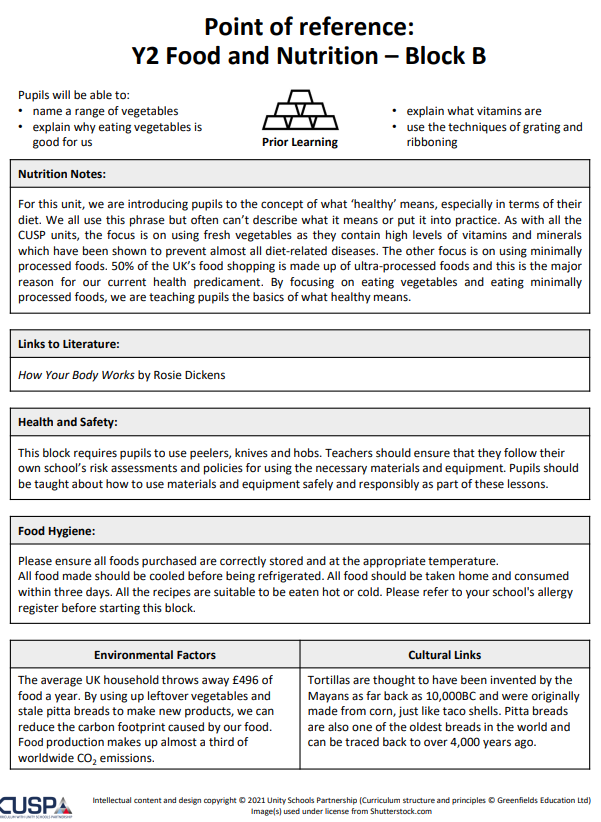
OVERVIEW OF KNOWLEDGE
Each unit includes an overview for the teacher which details the Health and Safety guidance, Environmental Factors, Cultural Links and further teaching notes to support.
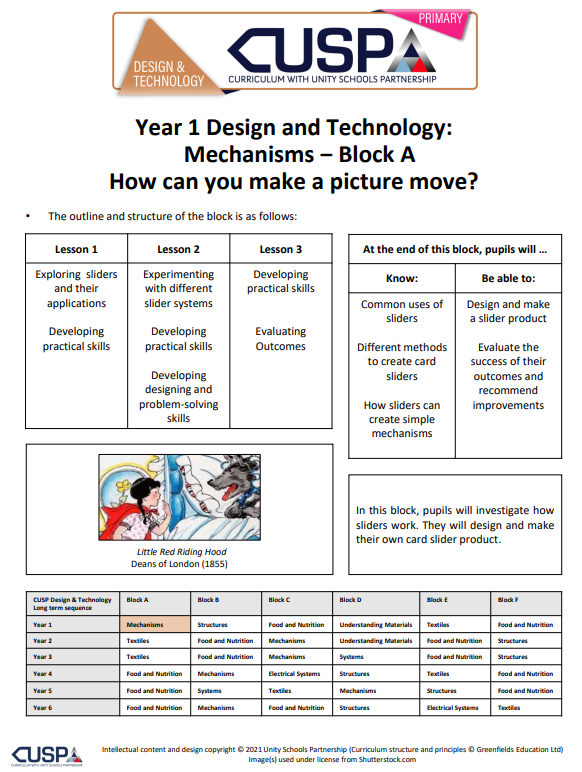
MAPPING OF KNOWLEDGE
The sequence of learning makes clear essential and desirable knowledge, key questions and task suggestions for each lesson and suggested self evaluation questions.
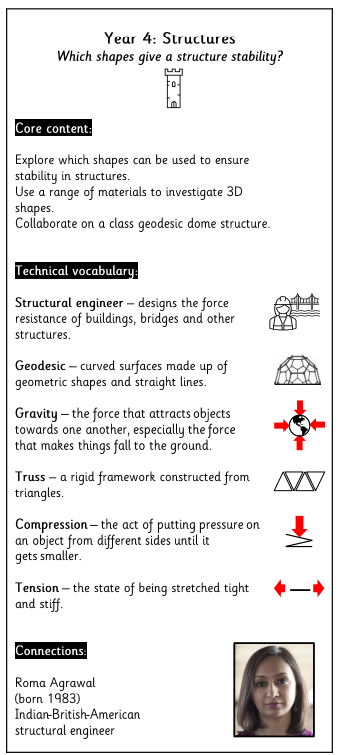
KNOWLEDGE NOTES
Knowledge notes are an elaboration in the core knowledge found in knowledge organisers.
Knowledge notes focus pupils’ working memory to the key question that will be asked at the end of the lesson. It reduces cognitive load and avoids the split-attention effect.
VOCABULARY
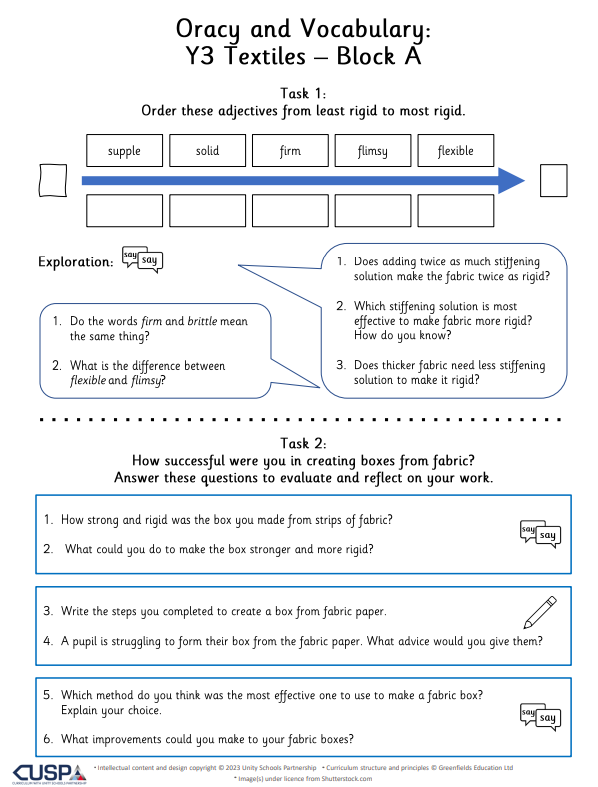
The units are supported by vocabulary modules which provide both resources for teaching and learning vital vocabulary and provide teachers with Tier 2 and 3 vocabulary with the etymology and morphology needed for explicit instruction.
We aim to provide a high challenge with low threat culture and put no ceiling on any child’s learning, instead providing the right scaffolding for each child for them to achieve.
Inclusion
At Phoenix, all pupils participate fully in Design and Technology.
We recognise that some pupils may require adaptations to access tools, materials or processes. Teachers carefully consider how lessons can be adjusted to ensure every child can participate meaningfully and successfully.
This may include:
-
Visual prompts, step-by-step task boards or model examples
-
Breaking complex processes into smaller, manageable stages
-
Pre-teaching technical vocabulary
-
Adapted tools or grips to support fine motor control
-
Alternative materials where sensory sensitivities are present
-
Additional adult guidance during practical tasks
Where appropriate, design briefs may be scaffolded so that pupils can focus on the critical core knowledge and skills, while still experiencing the full design process of research, design, make and evaluate.
Our approach is high challenge with low threat. We place no ceiling on any child’s potential, while providing the right scaffolding to ensure that all pupils experience success, independence and pride in their outcomes.
IMPACT
At Phoenix Primary, the impact of our Design and Technology curriculum is seen in the creativity, technical skill and problem-solving confidence of our pupils.
Children make strong and sustained progress from their individual starting points because learning is carefully sequenced and revisited over time. As a result, pupils develop increasing independence, precision and confidence in designing and making.
By the time pupils leave Phoenix, they are expected to achieve at least age-related expectations in Design and Technology and are well prepared to continue developing their technical and creative skills in secondary education and beyond.
The impact of our curriculum is also reflected in our Phoenix Values:
- 🔴 Resilience – pupils refine and improve their designs through testing and evaluation.
- 🔴 Responsibility – pupils work safely and consider the impact of their design choices.
- 🔴 Kindness – pupils collaborate positively and support one another in practical tasks.
- 🔴 Ambition – pupils demonstrate creativity, precision and pride in their finished products.
Enthusiasm for Design and Technology is evident through pupil voice, the quality of completed projects and the confidence pupils show when explaining their design decisions. Our children leave Phoenix as capable, creative and reflective young designers.
How do we know what our children have learnt?
At Phoenix, assessment in Design and Technology is purposeful, ongoing and rooted in pupils’ development as designers.
Assessment is primarily formative and takes place within lessons as pupils design, make and evaluate. Teachers use questioning, discussion and observation to assess pupils’ understanding of technical knowledge, processes and vocabulary.
Each block makes expectations explicit. Teachers are clear about what pupils should know and be able to do by the end of the unit — for example, selecting appropriate materials, constructing stable structures, applying mechanisms accurately or evaluating products against design criteria.
Assessment is supported through:
-
Clear design criteria within each project
-
Structured evaluation opportunities
-
Questioning that probes understanding of tools, materials and processes
-
Observation of practical skill and independence
-
Retrieval tasks that revisit technical vocabulary and knowledge
-
Self-evaluation questions encourage independence, resilience and critical thinking, while maintaining high expectations for technical accuracy and creativity.
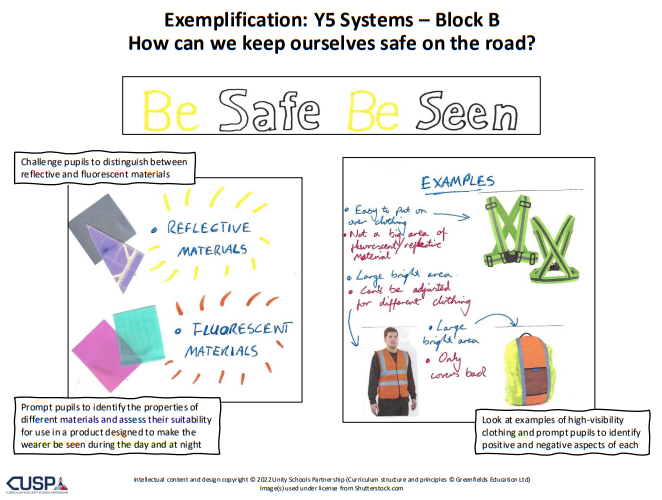
Assessment in Design and Technology happens as children create. As pupils explore materials, construct products and refine their work, teachers observe their decision-making, precision and responses to feedback. Through discussion and reflection, we see their growth as designers — not just the finished product.
PUPIL BOOK STUDY TELLS US:
At Phoenix, we regularly look at pupils’ work to make sure our Design Technology curriculum is having the impact we intend.
1. Is our curriculum making a difference?
We check whether children are building secure knowledge over time and developing a deeper understanding as they move through the school.
2. Is learning lasting?
We look for evidence that teaching helps children remember more, not just complete tasks. We want learning to stick.
3. Are children thinking deeply?
We consider whether activities challenge pupils to think hard, apply what they already know and develop strong, long-term understanding.
This helps us ensure our Design Technology curriculum remains ambitious, engaging and impactful for every child at Phoenix.